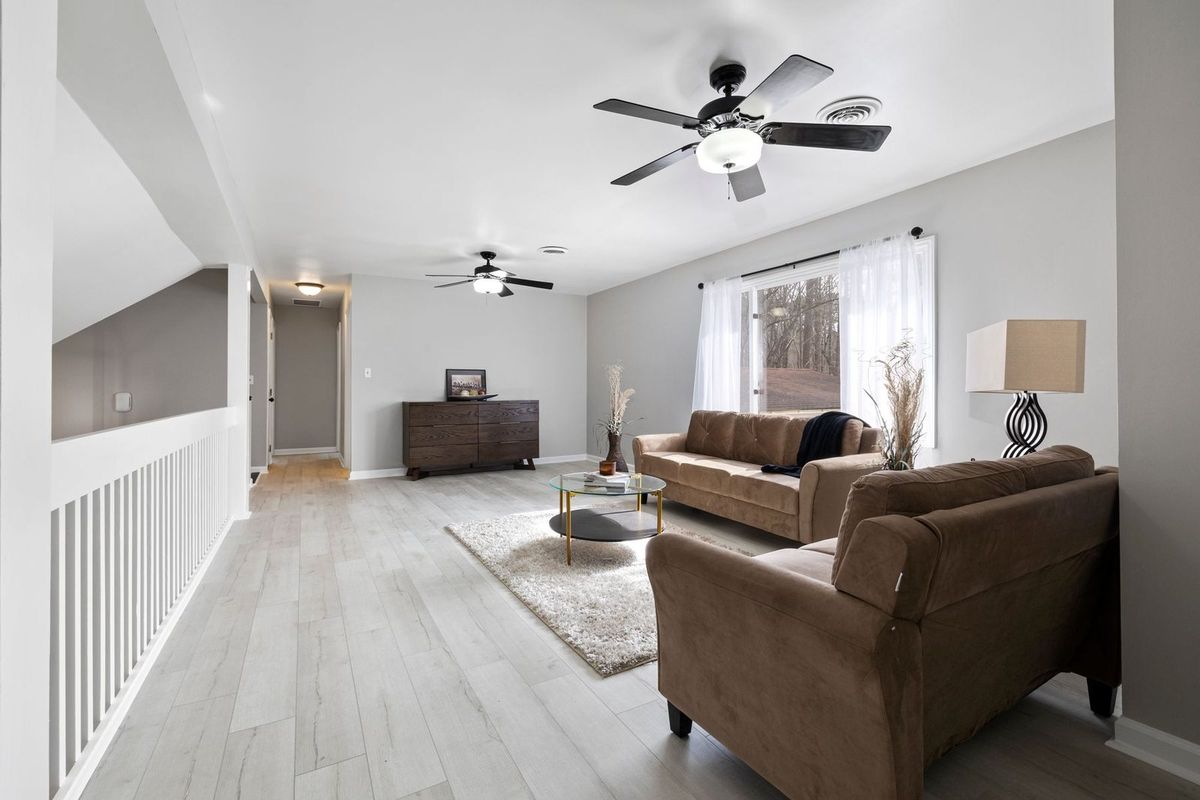
Across the four counties, rigid-core vinyl plank has become the default whole-house floor. It looks enough like wood, cleans up after anything, does not care about the dishwasher or the dog, and runs room to room without the transitions that make a house feel chopped up.
Where it makes sense
Everywhere, which is the point: kitchens, baths, laundry, entries, living areas, bedrooms, basements and stairs with matching nosings. Houses with dogs. Rentals. Daylight basements over slabs. Condos with sound rules, with the right underlayment.
Choosing a product
SPC or WPC core; a 20-mil wear layer as the standard; attached pad or added acoustic underlayment; plank size to suit the house; embossed-in-register texture, matte finish, enough pattern variety that repeats are not obvious. Bring samples home.
Flat subfloors
Vinyl plank shows every ridge and dip within months. Installers grind, fill and, in older houses with plank subfloors, add an underlayment plywood layer. See subfloor repair and leveling.
Floating or glue-down
Most homes float with click-lock joints and the manufacturer's expansion gaps. Large open areas, heavy fixed furniture and some rentals get glue-down for a quieter, more permanent floor.
On the quote
Square footage with waste, product by name and price, underlayment, removal and disposal, subfloor prep, transitions by piece, appliance pulls and resets, stairs by step, labor and schedule, approved in writing.