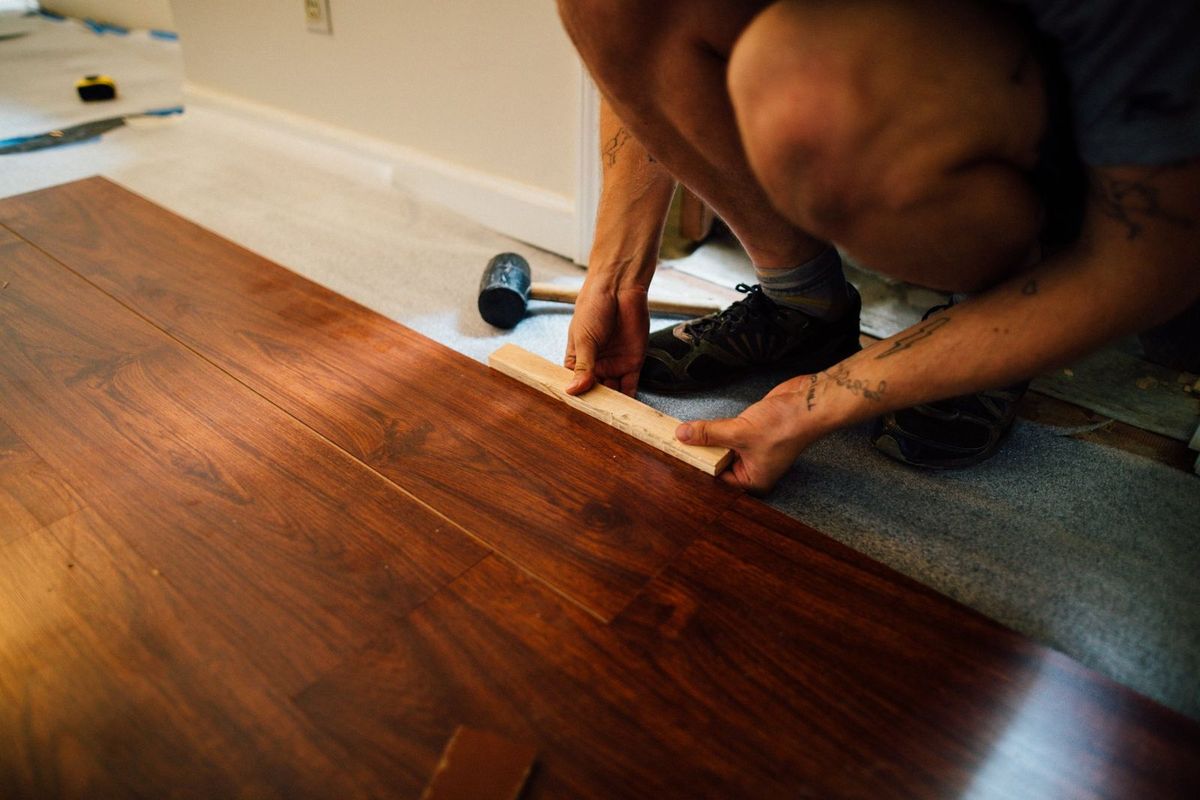
Where DIY works
A single room, roughly square, on a plywood subfloor that is flat and dry, with carpet to remove, no stairs, few doorways, and a product with an attached pad. Patient people with a decent saw do this well, and the savings on one room are real.
Where it goes wrong
The subfloor. Old plank subfloors, swollen seams, dips and humps that a floating floor will telegraph and that cause joints to separate. Flattening takes tools, compound and judgment.
Moisture. Most Puget Sound houses sit over crawl spaces that run damp. Without a meter and a vapor barrier, the floor swells from below within a year.
Expansion gaps. Held at every wall, cabinet, pipe and doorway, sized to the product and run length, and never pinned by baseboard or quarter round nailed into the floor. The most common DIY failure is a floor installed tight that buckles in August.
Cuts. Door jambs undercut, vents, closets, angles, the last row ripped lengthwise. This is where weekends disappear.
Stairs. Glued, fastened, nosed and templated. A different trade from floating a floor.
Transitions and run lengths. Where a floor has to break and how to make that invisible.
Appliances and plumbing. Pulling a dishwasher and a toilet and resetting both without a leak.
The real cost of DIY
Tools: a miter saw or a laminate cutter, a jigsaw, a pull bar and tapping block, spacers, a moisture meter, a long straightedge, leveling compound and a trowel, knee pads. Rental or purchase runs into the hundreds. Time: a professional crew does a 450-square-foot room in a day; a first-timer takes a weekend or two, plus the tear-out and the prep. Risk: a failed floor is removed and reinstalled at full cost.
The real cost of hiring
Labor-only installation on flooring you bought typically runs two to four dollars per square foot across the region, plus removal, prep and stairs, with a warranty-compliant installation and someone responsible if it fails. Full-service quotes bundle product at contractor pricing.
A reasonable split
Do the demolition yourself if you want to save: pull the carpet, pad, tack strip and staples, and clear the rooms. Leave the subfloor prep, moisture check, installation, stairs and transitions to the installer. Say so at the measure and the quote reflects it.